If you’re on the path to becoming a commercial pilot in the UK, one of the first big milestones is passing your UK CAA Class 1 Medical. It is a detailed assessment designed to ensure you’re fit to fly, both physically and mentally. I recently had mine at Heathrow Medical Services, and while I didn’t leave with the certificate in hand on the day, the process was incredibly informative.
The Medical – What to Expect
This is the second time I’ve taken an initial class 1 medical, due to lapsing my previous one by over 5 years (where has the time gone). The entire assessment took around four hours and included a range of tests, each checking a different aspect of your health. Here’s a brief summary of what was involved:
- Medical History Review
This started with a sit-down conversation covering personal and family medical history, current health, and lifestyle. The doctor was friendly and thorough, and it was a good opportunity to ask any questions. - Height, Weight, and BMI
Basic measurements were taken as part of the general health check. - Urine and Blood Tests
These screened for common conditions such as diabetes, kidney issues, cholesterol levels and a drug test. - ECG (Electrocardiogram)
Electrodes were placed on my chest to monitor heart rhythm and electrical activity, helping to rule out any hidden cardiac problems. - Blood Pressure
This was measured several times throughout the appointment, and unfortunately became a sticking point. - Hearing Test (Audiogram)
I sat in a soundproof booth and pressed a button each time I heard a tone through the headphones. This assessed hearing across various frequencies. - Eye Examination
This included distance and near vision tests, colour vision using Ishihara plates, and a full health check of the eyes. My results were mostly fine, but I do have astigmatism of -3.0 in one eye, which is outside the standard Class 1 limits. Because of this, my case is now being referred to the CAA optometrist for technical approval. - Lung Function (Spirometry)
I was asked to blow forcefully into a device to measure how much air I could exhale and how fast, ensuring normal respiratory performance. - Physical Examination
This included checks on reflexes, coordination, muscle tone, posture, and general movement, as well as listening to my heart and lungs.
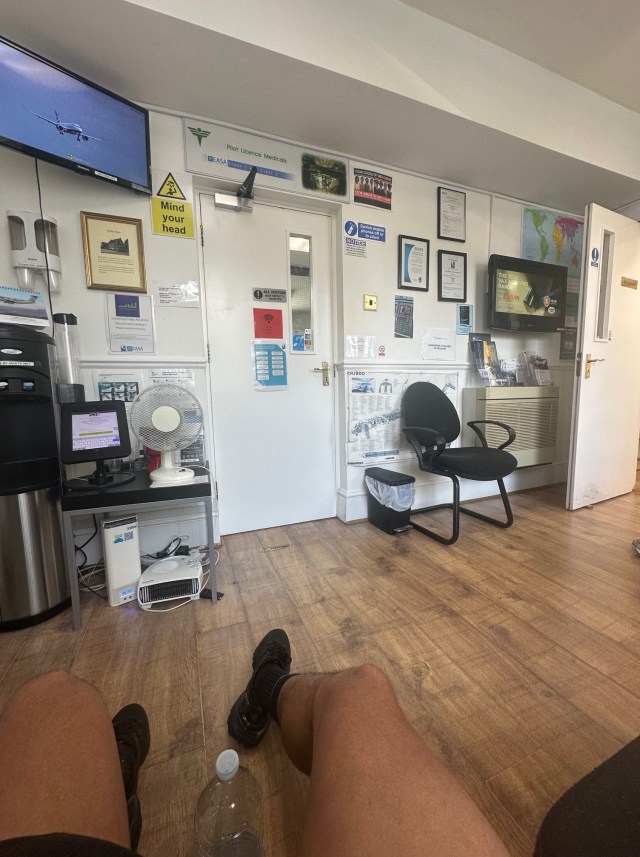
Why My Medical Wasn’t Issued On The Day
Although I got through most of the assessment without any problems, my blood pressure readings were too high on the day. The GP tried several readings at different times, but they remained above the acceptable limit. He reassured me that this is quite common in younger adults, especially men, and can often be attributed to anxiety.
To investigate further, I’ve been asked to complete a 24-hour ambulatory blood pressure monitor, which I’ll wear during a normal day. It will record my blood pressure at intervals, giving a better overall picture. Once I submit those results and if they are within range, my medical certificate can then be issued.
In addition, I’m also waiting for technical approval from the CAA optometrist due to the astigmatism in one eye being outside the usual limits. This is a common next step for anyone whose vision doesn’t quite meet the standard thresholds, and it doesn’t automatically mean disqualification.
Next Steps
Although I didn’t get the outcome I was hoping for on the day, the experience was still positive. The team at Heathrow Medical were professional and supportive throughout. The process was a reminder that becoming a pilot is about more than just flying, it requires you to meet high standards in every area.
With the 24-hour blood pressure results and optometry review pending, I’m staying optimistic. This is just one more step in the journey. Hopefully next time I write about this, it will be to share the news that my Class 1 Medical has been issued.
 Modular Pilot Kiran