My first PPL lesson’s were on the Effects of Controls these were a good introduction back into flying. I felt comfortable quite quickly with the controls, and I think a lot of that came from the hours I spent playing games on the computer as a child. It seems those years with a joystick in hand were not wasted after all.
Before even getting to the flying, I had spent some time looking at which aircraft I would actually fit in. After a bit of research and a practical check in the cockpit, I settled on the Cessna 152. It is compact but straightforward, and it felt like the right choice for training (also the cheapest). The first aircraft I flew was G-SHBA, which already feels like a registration I will not forget.
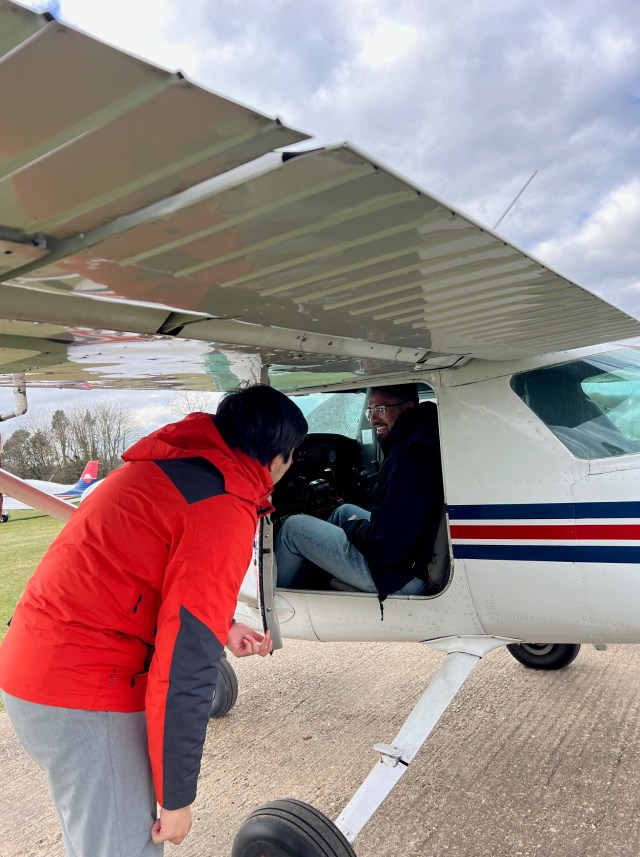
The lesson was with my instructor, Greg. He is a new Flight Instructor waiting for the opportunity to move on to an airline role, and he comes across as very detail orientated. Before giving me control, he demonstrated everything carefully, making sure I could see exactly what he was doing and why. That methodical style made the handover feel very natural.
The focus was on the three primary controls: ailerons, elevator and rudder. Each one has a specific job. The ailerons, located on the trailing edge of the wings, are used to roll the aircraft. Move the yoke to the left, and the left aileron goes up while the right goes down, creating a difference in lift that banks the aircraft. The elevator, found on the tailplane, controls pitch. Pulling back raises the nose, pushing forward lowers it, which in turn alters airspeed and climb or descent. Finally, the rudder, on the vertical stabiliser, controls yaw. It keeps the aircraft balanced, preventing the nose from swinging left or right unintentionally, and is particularly important when coordinating turns.
What became clear during the lesson is that these controls rarely act in isolation. A roll with the ailerons, for example, produces a secondary effect of yaw, so the rudder is needed to keep the manoeuvre balanced. The same applies when pitching: changes in speed bring about changes in stability, which require small corrections elsewhere. It was my first real sense of how flying is about coordination and smoothness rather than simply moving one control at a time.
Overall, it was a good lesson. Greg kept it calm and clear, and I enjoyed the chance to get hands on again. It felt like a gentle start, one that built confidence without being overwhelming, and it reminded me why I wanted to take on this training in the first place.
 Modular Pilot Kiran